









A Story of Unity, Not Division
New data shows that American families are prioritizing harmony at the Thanksgiving table:
- Across the political spectrum, almost three quarters (76%) report positive family interactions
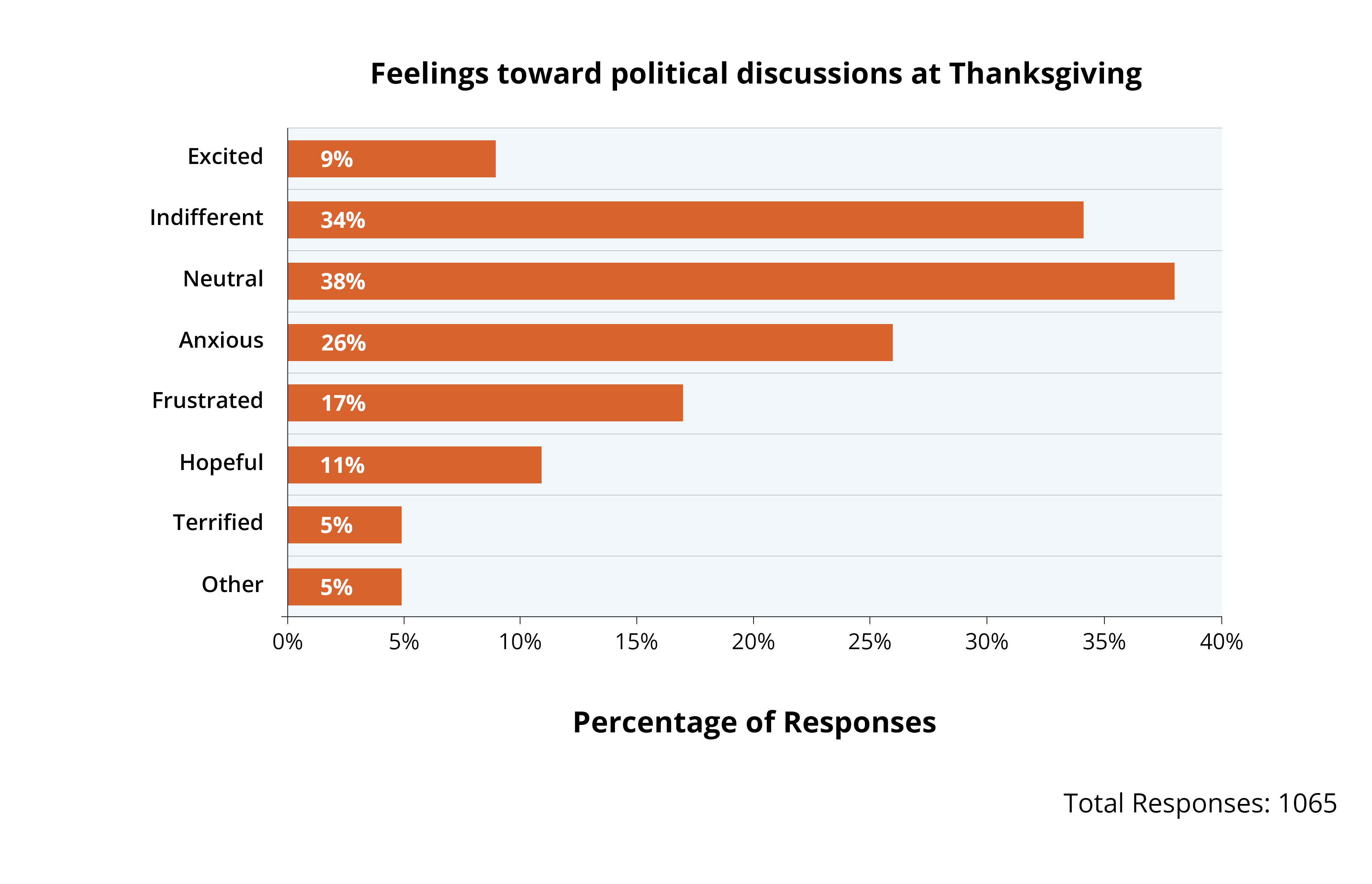
- 72% report feeling neutral or indifferent about the possibility of political discussion
- Qualitative interviews revealed five key strategies to prevent political conflicts and enable joyful family gatherings
To better understand Americans’ experiences and expectations about family interactions during Thanksgiving, CloudResearch fielded a nationally representative survey of 1,065 respondents the week before Thanksgiving. We asked them about their expectations, experiences with political conflicts at prior years’ Thanksgivings, and their strategies for preparing for conflict over deeply held political beliefs heading into this year’s gatherings.
Americans Feel Positive About Thanksgiving
Overall, Americans feel positively about family interactions at Thanksgiving with 76% reporting feeling somewhat or very positive.
Question: How do you generally feel about family interactions during Thanksgiving?
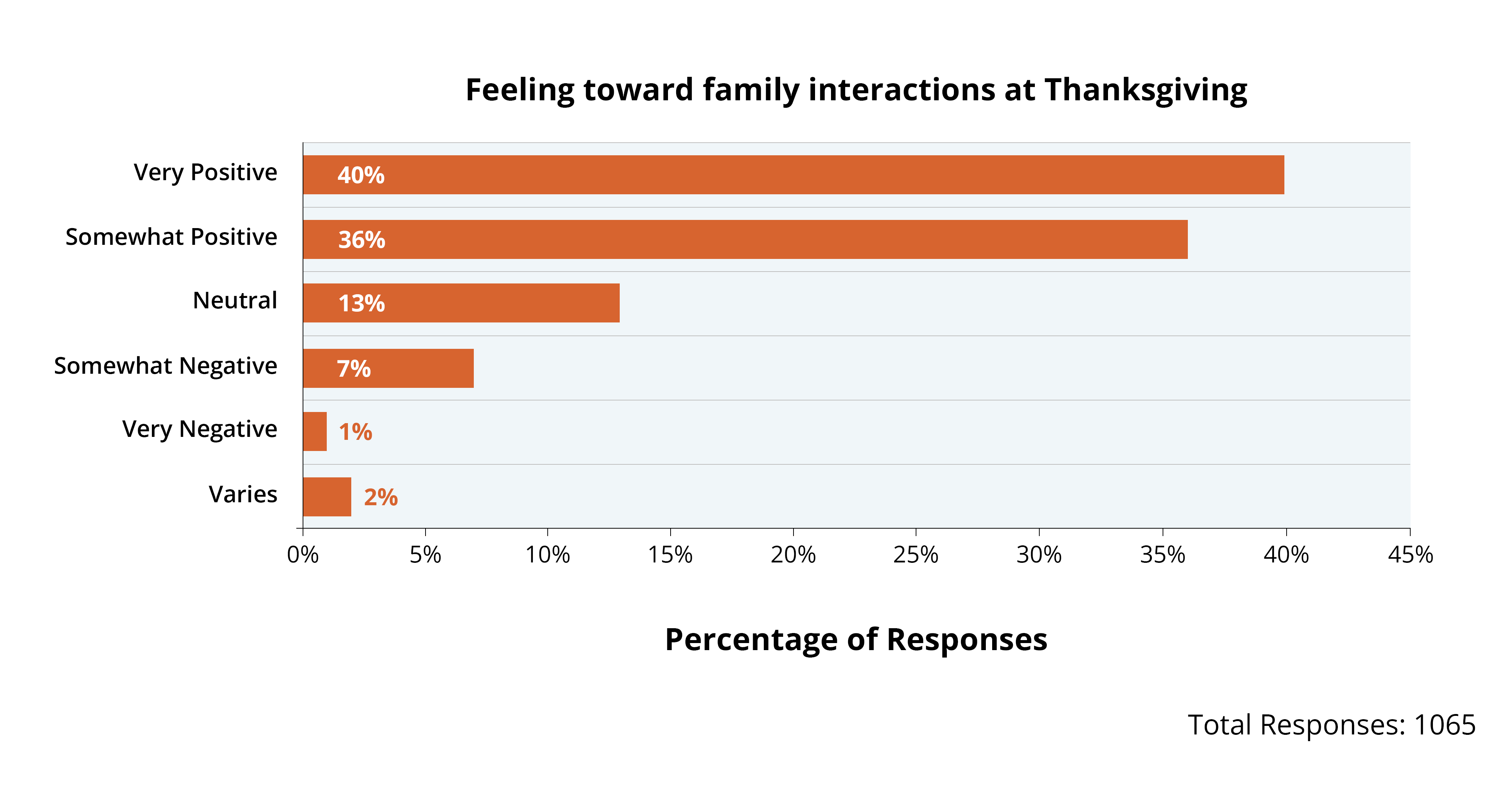
Perhaps surprisingly given the picture painted in media narratives about political discord and deepening distrust and dislike along party lines, our data demonstrate familial bonds and harmony are prioritized above ideological beliefs for many Americans. Feelings about the potential for a political discussion at Thanksgiving were also surprisingly neutral or indifferent.
Question: How do you generally feel about the possibility of political discussions at Thanksgiving gatherings?
After respondents rated various aspects of their family interactions and expectations for Thanksgiving political conversations, they were interviewed by Engage, a cutting-edge, AI-powered survey platform, about the strategies they use to navigate or avoid conflicts during Thanksgiving gatherings. Five top themes emerged underpinned by a simple yet powerful motive: preserving a celebration of thanks and joy. These are the top strategies that people told us they engaged in to manage or minimize conflict over political differences:
Top Strategies for Maintaining Harmony
1. Conversation Control and Calm: 60% reported using this strategy
This involves preparing mentally for potentially challenging conversations and have ready to go topics and strategies to implement if a conversation devolves into an argument. Some compile “safe topics” to pivot to. A 48-year-old male Democrat shared “I usually have 3 topics I can change the subject to like sports of pop culture”. Others prepare mentally to ensure peaceful interactions: A 40-year-old female Democrat said:
I would just plan to not engage in any emotional or political discussions and steel myself ahead of time.
A 65-year-old female Independent described her approach to:
Deflect any negativity directed toward me; avoid contact with those I know are ‘button pushers.’ Realize it’s only a few hours we’re together.
2. “Politics Pause” Protocol: 24% reported using this strategy
This involves establishing clear guidelines and set explicit expectations for avoiding political topics in discussions. Many families have a long-established tradition of avoiding divisive topics like politics altogether. Avoidance of such discussions often occurs through an unspoken rule or outright declaration to keep Thanksgiving peaceful, one 73-year-old male Republican noted:
We never discuss politics. I have made it clear we will not talk politics and we all adhere to that.
Another 43-year-old male Democrat emphasized:
I tell everyone before they come to bring a dish and leave politics at the door
3. Disagree, Don’t Duel: 16% reported using this strategy
This encourages respect for differing opinions and promoting civil conversation. A 64-year-old female Republican stated:
There is no law that says a family has to agree with each other. We can change the subject or just agree to disagree. Its really that simple. It doesn’t get heated. There is no point in that. We strive to enjoy each others company and don’t discuss sensitive subject especially on the holidays.
A 30-year-old female Independent shared the reminder of family ties as a tool for managing disagreement:
It’s easy for me to let it go. I know my family isn’t going to agree with me on everything but that doesn’t change the fact that we still love each other.
A 60-year-old female Independent emphasized perspective-taking and keeping an open mind:
everyone listens to other’s opinions and tries to understand their thoughts and ways of thinking.
4. Strategic Silliness Shift: 9% reported using this strategy
This utilizes humor as a diversion tactic to soften heated discussions. By introducing shared family memories or humorous anecdotes, individuals can steer conversations into more neutral areas.
Last year, a debate about politics got heated, so I gently changed the topic to a funny family story,
explained by a 46-year-old male Democrat. A 48-year-old male Republican shared:
Humor is usually the most effective topic demonstrating the power of laughter to unite us all.
5. Playful Pastimes and Participation: 8% reported using this strategy
Engaging in shared traditions and activities, like watching the football game or organizing family-friendly games, as a collective tool designed to keep tensions low. A 30-year-old female Democrat shared:
For us doing lighthearted activities like playing games and singing and watching movies beforehand really eases the mood.
A 50 year old male Independent shared that:
If we ever have an issue, we let a game of darts settle the debate,
showing how engaging activities help maintain a relaxed, enjoyable atmosphere and can even neutralize when tensions start to escalate.
Overall, these strategies reflect a broader desire to prioritize familial connections and shared experiences over divisive political debates during holiday gatherings.
Which Strategies are Most Effective?
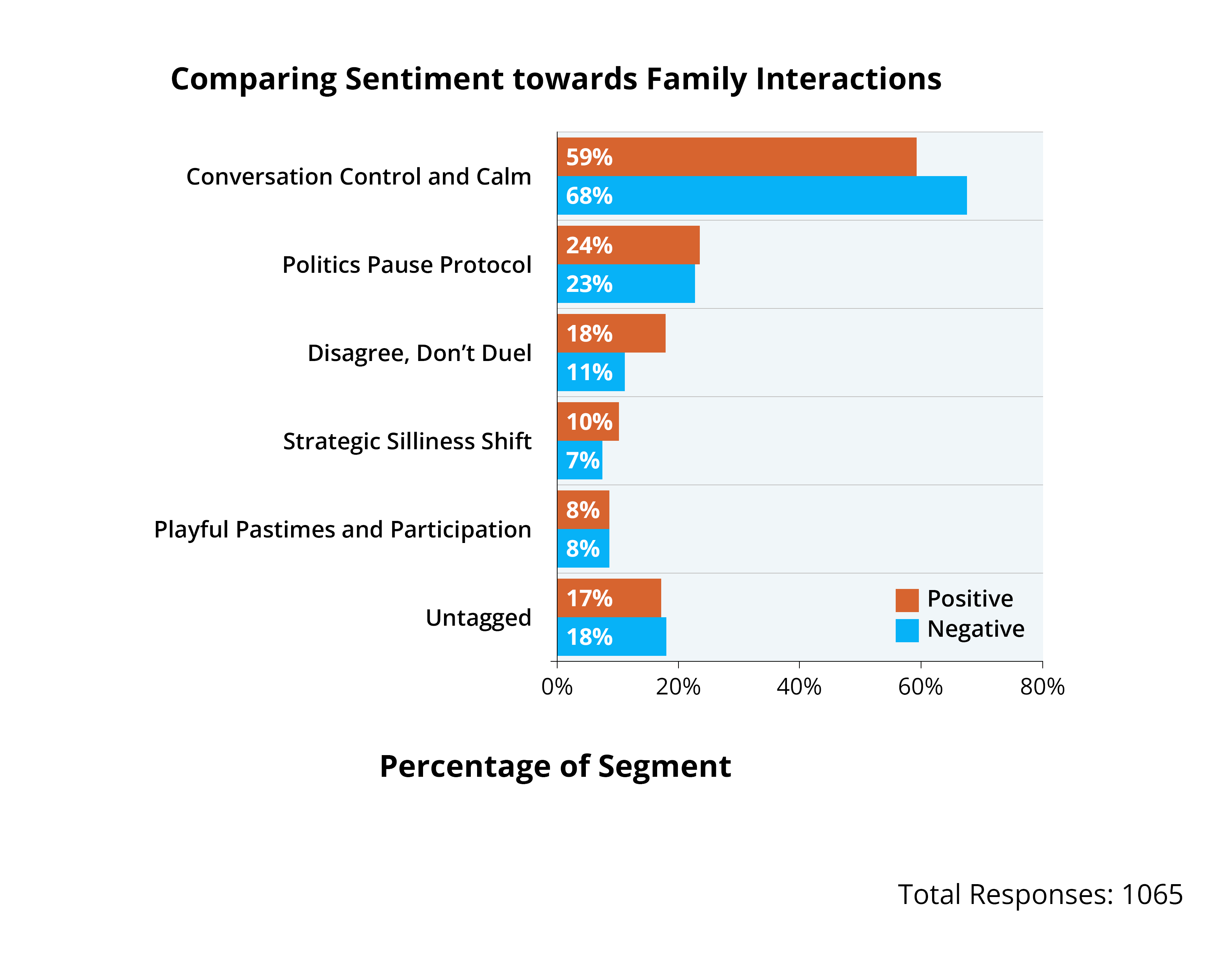
Comparing those who report positive family interactions to those who report negative ones enables us to assess whether some of these strategies are more effective overall. What we find is a general confirmation of the prevalence of each strategy across the groups, however those who report positive interactions are more likely to employ the ‘disagree, don’t duel’ strategy compared to those who report negative interactions suggesting that when ‘conversation control and calm’ and ‘politics pause’ doesn’t work, those who are better able to agree to disagree are more effective at maintaining harmonious family interactions.
Topics of Choice Across American Dinner Tables
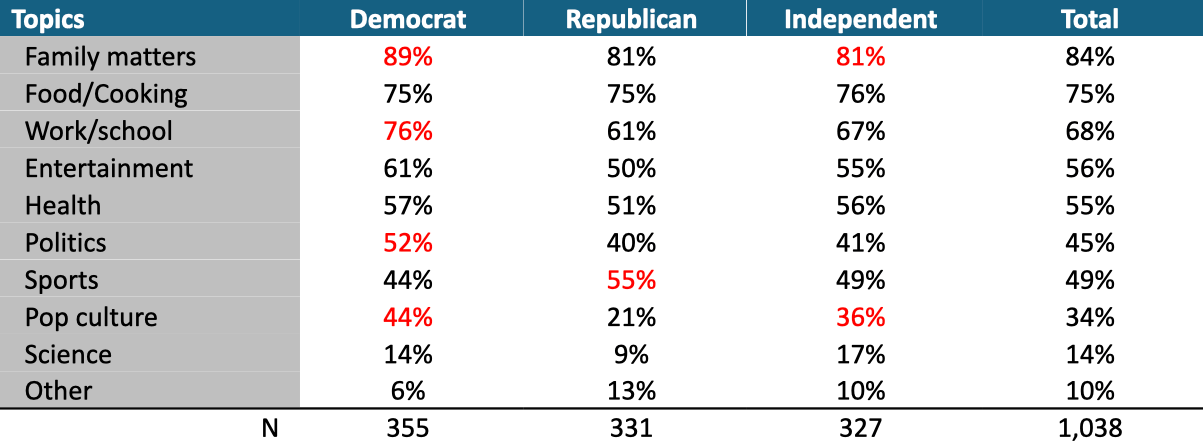
Across political party, family matters were the top topic at Thanksgiving gatherings. Although Democrats are more likely than Republicans and Independents to discuss politics, in rank order it was the 5th most common topic across the groups demonstrating that a focus on coming together to celebrate familial and platonic love remains core to Thanksgiving gatherings, no matter the political strife of the day.
Table 1. Most common topics of conversation with your family at Thanksgiving by political party.
Strength in the Family Unit: Harmony at Home Remains a Uniting Feature Across the Political Spectrum
Across social media and on the national stage tensions run high, and many are concerned about those simmering sentiments boiling over at family gatherings. While Thanksgiving has a reputation for stirring up simmering family tensions, our data demonstrate that countless individuals have discovered how to avert drama and maintain a harmonious, joyful atmosphere.
So, as you gather around the Thanksgiving table this year, remember that most families are finding ways to keep the peace, no matter what else is happening in the world. And if politics come up, why not steer the conversation toward this good news story—it might just be the perfect recipe for harmony and laughter.