












In this post:
- What descriptive research is and why it matters
- How Civil War battles illustrate the stakes of accurate description
- What you’ll learn in Chapter 3 of Research in the Cloud
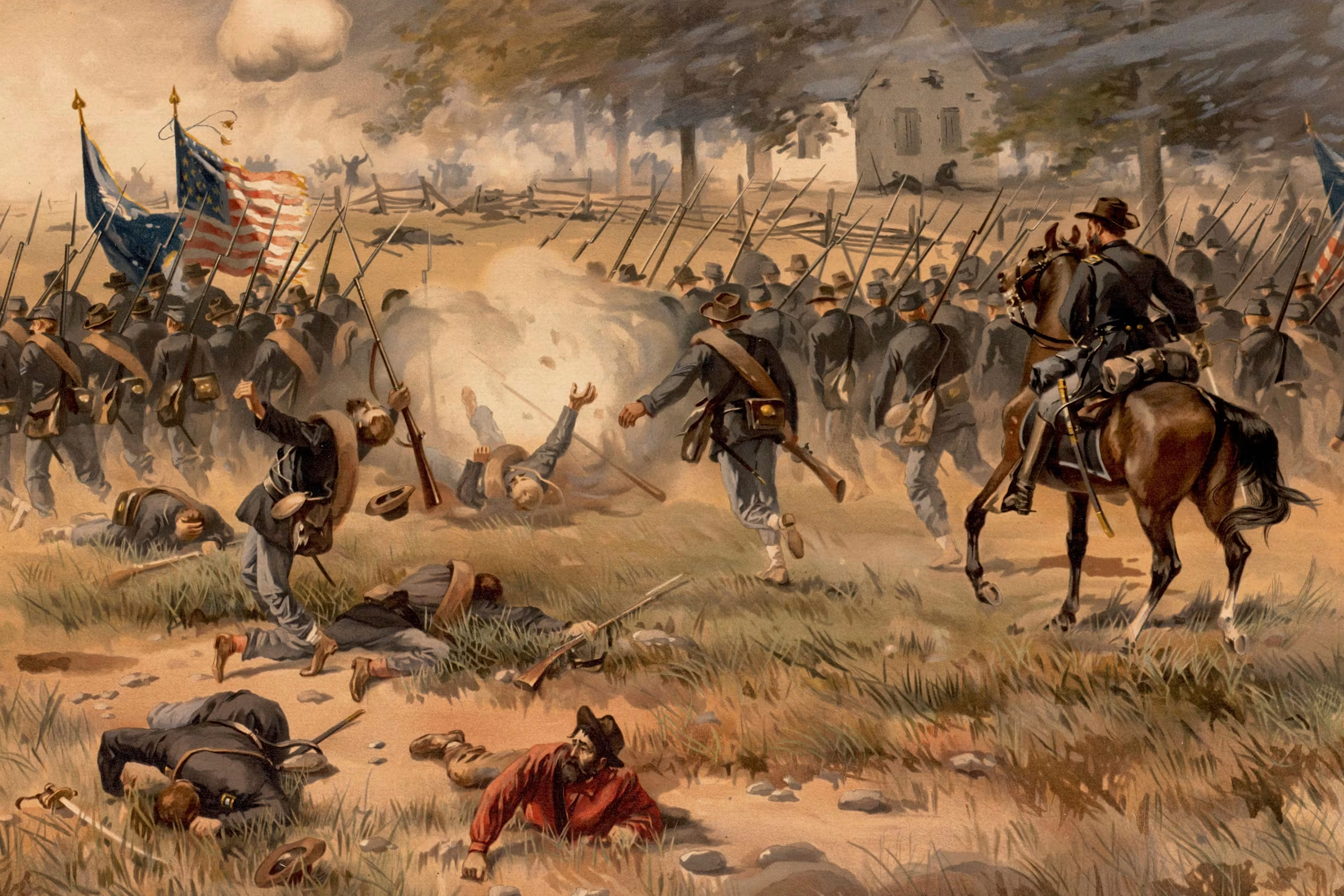
Accurately describing what happened is sometimes a matter of life and death. That was the case on the battlefields of the American Civil War.
In her book This Republic of Suffering, historian Drew Gilpin Faust describes the chaos that followed each engagement. Advancements in weapons meant soldiers could be obliterated, blown apart, trampled in charges. When the fighting stopped, commanders faced a grim task: counting the dead.
How many men did we lose? How many did they lose? Answering these questions was essential.
A general who overestimated his losses might retreat when he should attack. One who underestimated the enemy’s losses might march into a trap. George McClellan, commander of the Union’s Army of the Potomac, became infamous for his indecision. He consistently overestimated the strength of the Confederates and underestimated his own advantages. Some historians believe his hesitation after the Battle of Antietam in 1862 allowed the war to drag on for another three years. Thus, the simple act of description shaped not only whether men lived or died, but ultimately, who won the war.
The Power of Descriptive Research
Describing things isn’t always so dramatic. Often, it is mundane.
Pollsters measure public opinion, sociologists track divorce rates, and economists measure prices and inflation. To many people, these numbers are boring. But these “boring” descriptions are often the first step toward understanding bigger questions about how things are related or whether one thing causes another.
Consider public health surveillance. Every week, hospitals, doctors offices, and clinics across the U.S. report data on emergency room visits, diagnoses, and patient demographics. These reports help officials understand public health, as demonstrated with the resurgence of measles in the U.S. that began in 2025. Individually, each report is just a description. Accumulated, however, these descriptions create something powerful. They reveal patterns. They establish baselines. They sound alarms.
From Battlefields to Behavioral Science: What It Takes to Describe Things Clearly
Within the behavioral sciences, descriptive research serves the same purpose it did on Civil War battlefields: it tells researchers what they’re dealing with before they try to explain it or change it. You can’t understand why anxiety is rising until you’ve established that it is rising. You can’t explain why people spend less time socializing until you’ve described changes in how they spend their time. Description precedes explanation.
But description must be systematic to be meaningful. An inaccurate picture of reality is sometimes worse than no picture at all. There’s a reason George McClellan stands as a cautionary tale. He wasn’t just wrong; he was systematically wrong, repeatedly making the same errors in how he processed uncertain information.
Descriptive research in the behavioral sciences is designed to prevent this kind of mistake. When researchers design a survey, they think carefully about how questions are worded. When they select a sample, they consider who is included and who is left out. When they analyze data, they use techniques that distinguish real patterns from noise. The goal is a description that’s more reliable than intuition, more honest than wishful thinking.
What Is Descriptive Research?
Descriptive research is a collection of scientific methods designed to systematically observe, measure, and describe phenomena. Unlike experimental research, which tests cause-and-effect relationships, descriptive research answers the question: what is happening?
In the behavioral sciences, descriptive research methods include:
- Surveys that measure attitudes, beliefs, or behaviors across populations
- Observational studies that record behavior as it naturally occurs
- Case studies that examine individuals or groups in depth
- Content analysis that systematically codes text, images, or media
What unites these research methods is their goal: to produce accurate, reliable measurements that can serve as the foundation for other research.
| Type of Research | Question Answered | Example |
|---|---|---|
| Descriptive | What is happening? | Survey of mental health |
| Correlational | Which things are related? | Relationship between sleep and mood |
| Experimental | What causes what? | Does therapy help with depression |
Chapter 3: Descriptive Research Methods in Practice
Chapter 3 of Research in the Cloud introduces the methods behavioral scientists use to describe the world systematically.
The chapter starts with measurement. You’ll learn how researchers transform abstract concepts like anxiety or personality into variables that can be analyzed. Then, you’ll learn the difference between conceptual definitions (what something means in theory) and operational definitions (how it’s measured in practice), and you’ll see how descriptive research differs from correlational and experimental approaches.
From there, you’ll explore real examples of descriptive research: large-scale surveys that track mental health, observational studies that use sensors to capture behavior unobtrusively, and analyses that reveal patterns in everything from how long people shower to how fast they run marathons.
Then comes the hands-on work. You’ll design and program your own descriptive survey using Engage or Qualtrics, analyze the data in SPSS, and grapple with a classic moral dilemma that asks if it is okay for a man to steal to save his dying wife. Studying people’s reactions to this dilemma reveals the complexity that even a simple description of events can unearth.
By the end of the chapter, you’ll understand why description isn’t merely a prelude to “real” research, but the foundation. Every correlation, every experiment, every theory rests on a description of events. When researchers get the description wrong—as McClellan did—everything that follows is built on sand.
Descriptive research is the discipline of seeing clearly. It’s harder than it sounds.
This post is part of a series exploring the chapters of Research in the Cloud: A Hands-On Guide to Behavioral Research in the Digital Age by Aaron Moss, Jonathan Robinson, and Leib Litman.
Ready to learn descriptive research methods?
Read Chapter 3 for free! Research in the Cloud walks you through designing your own survey, analyzing data in SPSS, and understanding why description is harder than it sounds.